Posts tagged "Joel Klein"
inside baseball
January 31, 2012
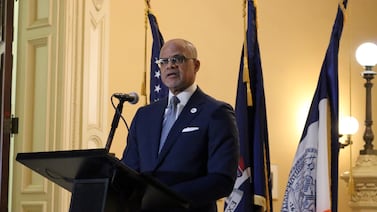
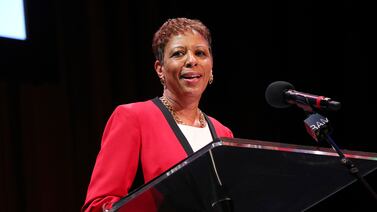
DOE’s press chief leaving to become Rupert Murdoch’s top aide
The Department of Education’s press office will be getting a new director in less than two weeks.
Natalie Ravitz, the department’s communications director since June 2010, is leaving to become chief of staff to Rupert Murdoch, the CEO of News Corporation. Her last day at the department will be Feb. 10.
Ravitz is following a well-worn path from the department to NewsCorp: Ex-schools chief Joel Klein, who was chancellor when Ravitz was hired, now heads the company’s growing education division. Last summer, Klein picked Kristen Kane, the department’s former chief operating officer, to become the division’s COO. He also acquired Wireless Generation, the technology company that developed and managed ARIS, the city’s school data warehouse.
After years in political communications, Ravitz arrived at the department during the summer of 2010 and shepherded its press operations through two abrupt changes in departmental leadership. She succeeded David Cantor, who held the job for longer than any of his predecessors before leaving for the private sector. (more…)
what he said
December 2, 2011
Bloomberg’s class size comments more strident but in character
If Mayor Bloomberg had his druthers, he would fire half the city’s teachers and pay the remaining half more to supervise twice-as-large classes.
That’s what he said during a wide-ranging speech at the Massachusetts Institute of Technology on Tuesday in which he argued that weak training, social change, and the teachers union have conspired to fill New York City’s schools with less-than-ideal teachers.
“If I had the ability, which nobody does really, to just design the system and say, ex cathedra, this is what we’re going to do, you would cut the number of teachers in half, but you would double the compensation of them, and you would weed out all the bad ones and just have good teachers, and double class size with a better teacher is a good deal for the students,” Bloomberg said.
Listen to the portion of the speech where Bloomberg talks schools (starting at about 5:00):
Audio clip: Adobe Flash Player (version 9 or above) is required to play this audio clip. Download the latest version here. You also need to have JavaScript enabled in your browser.
The comments have drawn fire from UFT President Michael Mulgrew, elected officials, and many others. But while they were provocative and unusually specific, the speech tread familiar territory for the mayor. (more…)
compare and contrast
November 30, 2011
School choice advocates rank city’s enrollment policies as best
The same admissions processes that leave city parents scratching their heads or, worse, pulling their hair out have put New York City at the head of the pack in a new study ranking districts’ school choice policies.
The report, by the nonpartisan Brookings Institution, which has long pushed for expanded school choice, compares choice policies in place in 25 urban school districts and how families took advantage of them.
New York City came in first, in part because students here are never assigned to schools based simply on where they live. Of the 25 districts, New York was the only one where students are assigned to schools based on applications that asked for families’ preferences, not just their address.
The city has a labyrinthine citywide high school matching process and district-based middle and elementary school admissions processes that many believe could be improved. In a district with more than 1,600 schools (the Brookings report tallies 1,474), the processes are seen as bringing order but also as sometimes pitting schools against each other and limiting options, particularly in high school, for students who aren’t happy with what they’ve chosen.
The Brookings report also gave New York credit for making data about school performance public and closing or restructuring low-performing schools. But its B grade would have been higher if it had more virtual school options and provided transportation when students enroll in schools outside their districts.
To tie in with the report, former city schools chancellor Joel Klein, who bolstered and expanded the city’s school choice policies, is speaking at Brookings’ Washington, D.C., offices today. (more…)
Mergers and acquisitions
November 15, 2011
NYC-based education reform group folds into Stand For Children
John Legend Talks About Stand for Children from Stand for Children on Vimeo.
With both of its founders off the education stage, the Education Equality Project gracefully closed its doors this week when its remaining board members joined Stand for Children, a national school reform advocacy group.
Board members announced the news in a press release today, although insiders said the partnership was considered a done deal for several months. EEP has been without a staff since December and has been looking for suitors to meet its lofty national ambitions ever since.
By tapping into EEP, Stand For Children will gain three board members — including Grammy Award-winning R&B singer John Legend — and access to a powerful and diverse Rolodex of influential people who could help it establish beachheads in more states. (more…)
inside baseball (updated)
November 8, 2011
NY Mag: Bloomberg pushed Klein out before he was ready to go

The press conference where Joel Klein's resignation was announced
When Chancellor Joel Klein suddenly announced his resignation a year ago tomorrow, speculation immediately mountedthat he had been pushed out.
But Klein insisted that he had chosen to leave the Department of Education and said Mayor Bloomberg had asked him to stay on.
Now, new details tucked into a New York Magazine profile of Rupert Murdoch’s daughter Elisabeth seem to confirm that Bloomberg set the timeline for Klein’s departure — and suggest that Klein’s decision to head to Murdoch’s News Corporation was hastily made.
From the article:
On Sunday morning, November 7, 2010, Michael Bloomberg called Klein and told him that he would be announcing that Klein was resigning that week. Klein and the mayor had been discussing Klein’s departure from Tweed Courthouse for months—but Klein was still taken aback at the timing of the decision. He had been in informal talks with several Wall Street firms, but nothing had materialized. Without a job lined up, he “panicked,” according to a person familiar with the matter. So Klein called Rupert. (more…)
under pressure
October 12, 2011
Required to help ELLs, city to open 125 new bilingual programs
The city will launch 125 new bilingual programs under the terms of a required plan to improve the treatment of students who are classified as English language learners.
Test scores and high school graduation rates for ELLs lag far behind the city average, and last summer the state told then-Chancellor Joel Klein to produce a “corrective action plan” for how to serve the students better.
That plan, released today and posted below, sets out an ambitious remediation schedule — and also highlights just how much the city has lagged in providing legally mandated services to ELLs.
In the plan, the city promises to reduce the number of ELLs whose teachers are not trained to work with them and to punish schools that fail to provide services to which ELLs are entitled.
It also promises to launch 125 new bilingual programs by 2013, including 20 this school year, on top of the 397 that are already open. The new programs will open in districts with many ELLs and where parents say they prefer their children placed in classrooms where instruction takes place in two languages, rather than in English-only classes with extra help for non-native speakers. The city has hired Ernst & Young, an auditing group, to monitor whether parents’ choices are honored.
Some of the new programs will open in high school campuses where no bilingual instruction currently takes place. When he approved several school closures in July, State Education Commissioner John King expressed concern about whether new high schools would serve the same students who attended the schools that closed. The plan commits to opening new programs when existing ones phase out along with their schools. (more…)
explainer
September 19, 2011
Why New York City isn’t joining Chicago in extended-day uproar
New Yorkers following Chicago’s snowballing union-district
Chicago’s new mayor, Rahm Emanuel, and his schools chief, former New York City deputy Jean-Claude Brizard, are pushing schools to add 90 minutes to their 5-hour-long days, among the shortest in the nation. But they have offered teachers only 2 percent more pay, raising the ire of the teachers union, whose president, Karen Lewis, has said Emanuel is creating “a nightmare” by asking union members to override their union contract.
Even though the union has filed a lawsuit over the plan, Emanuel and Brizard decided to shop the proposal school by school, and teachers at at least nine schools have voted to extend their working hours—and the instructional day. The city and the teachers union send out warring press releases each time another school takes a vote.
Staff at New York City schools routinely take similar votes, but with less fanfare. There has been no system-wide push for a longer school day in years, and educators do not foresee a Chicago-style showdown repeating in New York.
That’s in part because the average New York City school day is already much longer than Chicago’s, and slightly longer than other major cities’, with many students in school for 6.5 hours or more. In addition, the district already struck a flexible deal with the union five years ago to extend the school day by 37.5 minutes four days a week for at least 290,000 city students, mostly those who struggle academically. How that time is spent is, to a large degree, up to each school.
Researchers say it is almost impossible to make a good estimate of the length of the New York City school day—something that one Chicago columnist found last week when he tried to tally the numbers—because instructional time requirements vary by grade-level and subject, and principals and teachers can decide together how they want to structure parts of the school day. (more…)
Data Dumped
September 16, 2011
Union: From style to substance, relationship with city improved
With the city’s Teacher Data Reports now in the past, the teachers union is set to move forward on negotiations that will build on a pilot program that’s in place in 33 schools.
The controversial reports, which assigned ratings to about 10,000 teachers based on their students’ test scores, were championed by former chancellor Joel Klein. Klein said he would release the scores to the public after news organizations filed a Freedom of Information request for them — a move that the United Federation of Teachers quickly opposed in court.
But in his first major reversal from one of Klein’s policies, Chancellor Dennis Walcott has said he does not think the ratings, which the UFT agreed to in part on grounds that they would remain internal, should be made public. Yesterday, Department of Education officials told the New York Times that they would no longer calculate teachers’ ratings according to the TDR algorithm because the state is rolling out a different model.
UFT President Michael Mulgrew told GothamSchools today that doing away with the TDRs wasn’t necessarily a precondition for the UFT to work with the city on a new teacher evaluation model, required under state law. But he said their disappearance would clear the way for negotiations.
“I really do appreciate that Dennis has taken that position, unlike previous chancellors,” Mulgrew said. “But it does help that we have a better relationship and we’re working together. That helps getting to any deal.” (more…)
crib sheet
August 31, 2011
We read Steven Brill’s “Class Warfare” so you don’t have to
Eva Moskowitz did not generate the idea for Harlem Success herself; Randi Weingarten has been criticizing her successor, UFT President Michael Mulgrew, to her friends; and former Chancellor Joel Klein thinks that at least two of his former deputies have gone soft on reform in their new school districts. These are among the claims in “Class Warfare,” Steven Brill’s new book on the education reform movement.
Much of “Class Warfare” will be familiar to GothamSchools readers. The book’s main characters include, on one side, former Schools Chancellor Joel Klein and, on the other, teachers unions president Randi Weingarten; many of its main plot points center on New York City, and some of the key classroom scenes take place in Harlem.
But the following insights — some of them more solidly sourced than others — were news to us. Here’s a run-down of Brill’s most intriguing New York-related reporting:
The war behind the war: Bloomberg v. Klein
- On labor issues, Bloomberg sometimes undercut Joel Klein. Klein’s team thought they could get the UFT to sign off on a change in the teacher termination process. But Bloomberg, who was nearing reelection, told them not to push their luck. “The mayor blinked,” the DOE’s one-time labor chief, Dan Weisberg, told Brill. “The mayor just gave up.” Weisberg said he “clashed almost daily” with City Hall over back-channel contract negotiations in 2005. (more…)
human capital
August 23, 2011
Principals cut 2,000+ teaching jobs; city plans school layoffs
Budget cuts caused principals to cut thousands of positions this year, but the total number of teachers without permanent jobs rose only slightly, the Department of Education revealed today.
The Bloomberg administration also announced plans to lay off nearly 800 school employees who do not belong to the teachers union, which negotiated a deal in June to avert layoffs. Most of those employees — 737 of 777 — belong to DC-37, which represents school aides and other auxiliary school personnel. The layoffs are set to start in October.
When the city announced in July that schools would have to cut an average of 2.43 percent from their budgets, many principals complained that they had little fat to trim. They said they would have to turn to eliminating necessary positions and sending junior teachers to the Absent Teacher Reserve, the pool of teachers whose positions were cut or lost as a result of school closures or enrollment changes.
In the end, they sent 2,186 teachers to the ATR pool this summer. More than a thousand of those teachers have already left the pool, either by finding new positions or leaving the system. A DOE spokeswoman said many of the teachers were rehired by their original schools after funding became available to keep them there.
That leaves 1,940 teachers in the ATR pool with just weeks before the start of the school year. Last year, the pool contained 1,779 teachers just before classes began.
Though small, the growth in the size of the ATR pool still places added financial stress on the department. (more…)