GothamSchools — daily independent reporting on NYC public schools

panic attack

As dust settles after strike threat, questions about city’s urgency

School buses at Coney Island in 2008.

For Simon Jean-Baptiste, a veteran school bus driver who belongs to Local 1181, the city’s announcement Friday that his union could go on strike at any moment was news to him.

“It’s the city that we heard that from,” Jean-Baptiste said today.

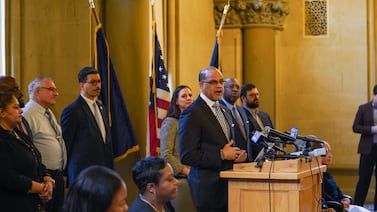
Jean-Baptiste, a former vice president in the union, said he had no idea there was any kind of citywide strike threat until he first heard about it from media reports prompted by a last-minute press conference called by Mayor Bloomberg on Friday. Bloomberg warned that Local 1181′s leadership opposed the city’s plans for a new contract for pre-kindergarten bus drivers because the city would not guarantee job security for experienced drivers. As a result, he said, an “immediate” strike was possible.

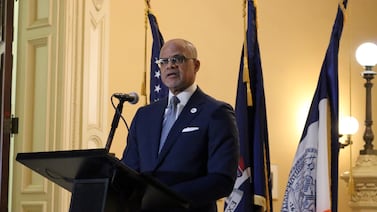
At the same time, Schools Chancellor Dennis Walcott sent a comprehensive plan to principals for how they should handle a strike should it occur.

Hours later, Local 1181 President Michael Cordiello said in a statement that a strike over seniority rights was “likely” but not imminent. Today, Cordiello said in a statement that the union was beginning to weigh its options.

“We do not want to strike, but we have been forced to keep our options open by cost-cutting proposals by Mayor Bloomberg,” he said.

As buses rolled up to schools on time this morning, and with no strike imminent, some are questioning the urgency with with Bloomberg and Walcott presented the threat.

The prospect of a school bus strike didn’t even register at a Panel for Educational Policy meeting Thursday evening, even though the group is responsible for voting on all busing contracts.

A PEP member, Patrick Sullivan, said he suspected that the Friday hype was meant to “demonize” the bus drivers union in order to turn public opinion against its demands.

“I think it’s appalling, really,” said Sullivan, a frequent critic of DOE policies. “[City officials] clearly had a whole plan of action planned and the next day they went out to the press and all of a sudden a strike was imminent. It seems the goal of it was to make parents afraid.”

Jean-Baptiste said union members would likely discuss the contract issue for the first time at a delegates meeting Tuesday evening.

“What is striking to me is that the city is panicking about whether there will be a strike, but the union never mentioned anything like that,” he said. “I think the city is spreading fear.”

That’s a view that Sam Pirozzolo, a parent leader on Staten Island, home to many of the bus contractors that do business with the city, expressed in an op-ed on Saturday. After speaking to union officials and quickly realizing that the threats were not as urgent as the city said, Pirozzolo wrote that he saw the press attention as meant “to instill fear throughout the city that a school bus strike was imminent.”

It isn’t the first time the bus drivers’ union has threatened to strike. It happened in 2006 and again when members authorized a strike last year (an actual strike hasn’t taken place in New York City since 1979). But this appears to be the first time in recent years that the city has worked to defuse a strike threat before union leaders even issued it publicly.

Education officials said the press conference was a direct response to what the bus drivers union had told them directly: that the drivers would strike systemwide.

“The purpose of the press conference was to inform parents about contingency plans and how they can prepare,” a DOE spokeswoman said.

Principals we contacted about the bus strike warnings offered a muted response, with one saying that the warnings were intense but not a distraction.

“It came amidst so much other business that it was hard to get too excited about,” emailed the principal, who works at a neighborhood school where few students ride school buses. She said her school had received Walcott’s letter and additional information about the threat three times.

“It did seem like a large reaction, but I guess I’d rather that they had a plan in place ahead of time than be left improvising after the fact, particularly in instances where there actually is advance knowledge.”

  • http://nyceducator.com/ NYC Educator

    It’s important for the Bloomberg administration to blame unionized workers for absolutely everything at absolutely every opportunity. Otherwise, people might start to think “accountability” applies to others. Like the mayor or Walcott, for example.

  • http://twitter.com/MaryConwaySpieg Mary Conway-Spiegel

    Giant, unnecessary distraction…a decoy.

  • il flerpolo

    A decoy for what?  

  • Tiredofflerpi

    To hiide the fact that Bloomberg has destroyed the education system that your kids are in and you don’t give a damn. You totally ignore the truth but constantly stir the pot.

  • Ken Hirsh

    This seems pretty straightforward (assuming the quotes in the story are accurate):

    1. The union, in its negotiations with the city, threatened to strike.  (See quote from Local 1181 president.)

    2. The Mayor felt that he had to prepare the system for the potential of a strike, given that the union president threatened a strike.

    3. People who dislike Bloomberg react as if he did something wrong by preparing people for the possibility of a strike.  Of course, if he didn’t do this and there was a strike, you can guess what those same people would say.

    If the quote from Cordiello is accurate, I’m not sure how GS could report the quotes from people like Sullivan without explaining how they fit together with the union admission of a threat to strike. 

    What am I missing here?

  • SickofBloomberg

    Aren’t you just the cutest?  THE FACTS:  The union never threatened a strike because they HADN”T DISCUSSED it yet.  Bloomberg and Walcott jumped the gun and immediately tried to influence public opinion by CREATING a baseless threat.  They needlessly purchased 300,000 metro cards.  Yes, it’s pretty strightforward: ANOTHER DOE BOONDOGGLE!!

  • Patrick J Sullivan

    There’s not much context here on GS.  You might try reading Sam Pirozzolo’s letter.  The DOE has been working for years with the drivers union to 1) seek legislation to require the seniority provision (EPP) in all contracts 2) fight the bus owners in court when they’ve challenged the provision and 3) support the union’s position by renewing contracts rather then putting them to bid.  All this time, actually years, the union had always threatened to strike if the seniority was taken away.   So it wasn’t a new development and it certainly wasn’t imminent.  In fact, the DOE didn’t issue the RFP for the contract lacking the EPP until hours after the press conference.

    The mayor and chancellor should have informed parents that they were parting company with the union and that the union’s response to loss of seniority may trigger a strike at some point.  But to say a strike was imminent when they knew it wasn’t was irresponsible.  Consider for a minute if you were a mom with a special needs child.  Would you want to be told on Friday that a strike was imminent? 

    I saw all the DOE players Thursday night.  No one said boo about their intention to release the RFP the next day, hold their press conference or launch 150K robo calls.  Why not?  Because they wanted the maximum shock effect they could get by misleading the public into thinking the union had abruptly threatened a strike.

    Sam picked up the phone to get the real story and did everything he can to get that out to parents.  I did what could to help him, including talking to a very uninformed Geoff Decker.   If you want to take cheap shots at us, fine.  But maybe you could try looking at the public schools from the perspective of parents seeking to get their kids educated rather than as a wealthy hedge fund guy looking to advance a privatization agenda.

  • Mab

    Thank you for the truth. This place is filled with dishonest people who have many hidden agenda’s.

  • Anonymous

    You know one of these days, Bloomberg and Walcott, will really have a point and then no one will believe them, like the boy who cried wolf.  They have obviously lost all credibility with teachers and parents.  Sad but true.

  • Ken Hirsh

    Thanks for the history lesson!  When the 1181 president describes a strike as “likely”, I can’t fault the Mayor too much for making preparations.  I understand how many people would object to the move, though, if it was viewed entirely as a negotiating ploy. 

  • il flerpolo

    “Sam picked up the phone to get the real story and did everything he can to get that out to parents.”

    Sam picked up the phone to get an Amalgamated Transit Union press release, and that’s what he passed on to parents.  According to him, Bloomberg’s motivation in publicizing a potential strike is “all about stealing money from the hard working citizens of NYC.”  By “citizens of NYC,” Pirozzolo means the members of Local 1181.  Pirozzolo counsels Bloomberg to instead “put his hands into the pockets of his own poorly run city agencies like the Department of Education,” and suggests that “[m]aybe he could eliminate some of the no bid and exploding contracts that plague our system and steal money from our classrooms.”  Yet the bus contract renewals that the City’s been rubber-stamping for the last 30 years are a prime example–perhaps the single best example–of the cost that no-bid contracts have on the classroom.  And the City’s complicity in this anti-competitive scheme for all this time exemplifies the bad decision-making in the DOE that Pirozzolo purports to decry.   It’s even more difficult to swallow in light of the long history of corruption in Local 1181.  And it should raise red flags about corruption in the DOE itself.  As you note, the City actually endorsed the contract terms that it’s now backing away from, and when the City got sued, its lawyers had the temerity to stand before the NY Court of Appeals and defend the contract on the basis that it was necessary to avoid a strike.  This was an outrageous argument, and thankfully, the Court would have none of it:

    Appellants fail to refute the facially anticompetitive features of the EPPs, which tend to invite cost-inflation and discourage new bidders from attempting to compete with the long-term contract holders.   As the Appellate Division noted, “[t]he EPP provisions at issue raise the prospect that a vendor will be required to assume a competing contractor’s labor costs, requiring that the vendor’s bid reflect not only the known expense of compensating its own employees but also the unknown and potentially much greater expense of compensating a competitor’s employees” (71 AD3d at 134).   Even if a new bidder can ascertain the pay scale of the existing contractor, the bidder does not know how many of the predecessor’s employees will need to be retained or the salaries of the individual employees, which vary by seniority and other factors.   In these circumstances, prudent bidders might inflate their bids to cover the contingency of having to pay unspecified salaries for a large number of a predecessor’s workforce, and the small-scale operations that currently hold the Pre–K/EI contracts might avoid the contest altogether for fear of losing the gamble.

    A brief look at the history of New York City’s public busing contracts since 1979 suggests that, in practice, the EPPs have had anticompetitive and cost-inflating effects.   The existence of EPPs has resulted in the School Age transportation contracts being performed by the same companies with roughly the same employees, year after year.   By contrast, Pre–K/EI transportation, which lacks EPPs, has proceeded with competitive bidding by a variety of small-scale companies, without serious reports of corruption or labor disruption, and without threats from the unions to strike or pressure to introduce EPPs. In short, the introduction of EPPs to the Pre–K/EI bid specifications might eliminate the cost-saving, pro-competition advantages Pre–K/EI busing has enjoyed and would likely introduce the same problems of favoritism and monopolization of the market by large contractors that has beset the School Age contracts.   

  • Goodbye

    No one seems to really understand the truth, perhaps because it rests so close to their noses, they just can’t see it

    The Union is concerned that they are losing their leverage over the entire school bus industry.  If the Union was a commercial enterprise, their position would face Antitrust violations; however, since they are only a labor organization, they appear as protectors of employee rights. However, in fact they are superficially only defending their own seedy deals, promoting corruption and funding organized crime affiliations.  I cannot believe the City allowed the Union to rule over the school bus industry for so long before growing a pair and putting out the Union from where they do not belong.  Now the Union is backing off with their tail behind their legs hoping to salvage their labor organization for as long as they can, until like all great empires, fall to a smoldering pile of rumble.  Good luck.

Tips, questions, feedback?

Contact us at .

Word from Our Sponsor

Follow GothamSchools

RSS
Subscribe to the daily email digest:

Chalk It Up

Recent Comments

0 comments so far today

Archives

May 2013
M T W T F S S
« Apr  
 12345
6789101112
13141516171819
20212223242526
2728293031