GothamSchools — daily independent reporting on NYC public schools

close read

A tale of two documents: the city’s impact statements evolve

At the heart of the city’s major courtroom loss to the union earlier this year over school closures were 19 short documents — the “educational impact statements” that the city used to make its case for shuttering schools.

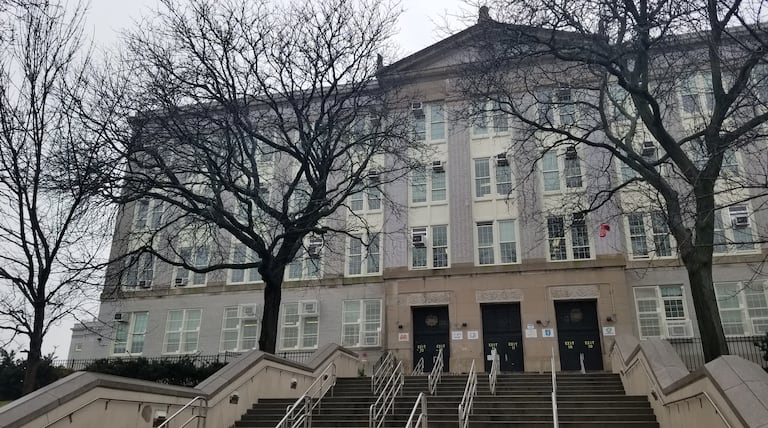
Now, the city has given those documents a makeover. But a review of last year’s and this year’s versions of the EIS for one school — Beach Channel High School in Rockaway, Queens — shows that while the reinvented statements are vastly more informative, they still skirt many of the points cited by critics opposed to closing the schools.

When a panel of judges blocked the closures last year, they acknowledged that the law gives city officials little guidance on what to include in the documents but does give them the discretion to close schools they believe are failing. But, as a panel of appellate court judges wrote, officials “abused that discretion by limiting the information they provided to the obvious — that students at phased-out schools would be accommodated at other schools to be determined.”

The revamped documents are city officials’ effort to cover their bases and go beyond “the obvious.” It’s still unclear how critics of last year’s process will greet the new statements. Union officials have said that they intend to pay close attention to how this year’s school closures unfold and possibly lobby Albany to change the process altogether.

The new format for the statements was finalized in October, when the Panel for Educational Policy approved changes to the city guidelines for the documents. At that time, the city released a template for the new statements. Now, the city has begun to release the statements for individual schools it wants to close.

The impact statement for the proposal to close Beach Channel has ballooned from barely nine pages last year to 31 pages. Here are two big questions the statements are intended to answer, and how city officials addressed them this year and last:

What will happen to the students who currently attend the school?

The new statement answers many questions about the school closure process that the previous iteration never even raised. For example:

— What happens to students who fall behind in their credits and thus remain “ninth-graders” after the school no longer serves ninth grade? (They will stay at the school and continue to take classes there. If they don’t have enough credits to graduate when the school finally closes its doors, they will be referred to one of the city’s programs for students older than 18.)
— What happens to the extracurricular activities and electives currently offered to students at the school? (They will begin to disappear, though city officials write that the decisions about exactly which activities and classes are cut will rest with the school.)
— What happens to the program for high school-age parents that is housed at Beach Channel? (It will stay in the building; city officials say the program will operate as long as there is demand.)

But the city also makes some questionable claims about how the school will serve its students as it phases out. One example: “As the school becomes smaller, students would receive more individualized attention through graduation to ensure they are receiving the support they need to succeed,” the statement says. But as the number of students at the school — and its budget — falls, the school will also lose teaching positions, making it unlikely that the staff to student ratio will increase.

What will happen to future students who might have attended the school?

Here, too, the new proposals offer far more detail than last year, but stop short of the thorough, far-reaching analysis some critics of last year’s statements hoped for.

Last year, one of the most commonly heard objections from parents was that the closure of the Rockaway’s last large high school would force students to leave the peninsula and attend schools much further away.

Only 9 percent of students residing in Beach Channel’s zone attend school there, the proposals note, whereas nearly half of the students at the new schools phasing into the building are from the neighborhood zone. City officials argue that the opening of better schools on the Beach Channel campus will benefit neighborhood students.

But after Beach Channel has closed its doors for good, there will be fewer total school seats in the neighborhood, something the proposal only obliquely acknowledges. The city’s enrollment projections for the schools in Beach Channel’s building the year after the school closes for good show seats for between 200 and 400 fewer students than currently attend the four schools in the building now.

So though the city says demand will rise, the supply is also shrinking. City officials note that when Beach Channel is closed for good and the new school is fully phased-in, the building will still only be half-full. If demand for seats in Rockaway grows, the proposal states, new schools may be opened.

The city also argues that, from a borough-wide perspective, it is replacing the seats lost by phasing out both Beach Channel and Jamaica High Schools with the new schools it plans to phase in. Those two schools currently serve 218 ninth-graders; the two new schools the city is planning to open in their buildings will open with a total of 220 new seats.

But both Beach Channel and Jamaica began this year with dramatically smaller ninth-grade classes than usual after a very complicated high school admissions process that took place while the schools’ fates hung on the outcome of a lawsuit.

When the city released a draft of the templates for the new statements, Leonie Haimson of the group Class Size Matters suggested that the city include an analysis of how many students in the area currently attend an overcrowded school and projections of how the school closings would affect those numbers in five years.

The new proposals list the other Queens high schools that have programs in the same specialized interest areas as Beach Channel’s. The lists of options the city provides include other schools the city is planning to phase out, such as Jamaica.

And most of the options are in other Queens schools that are already notoriously overcrowded. For example, of the 10 schools listed as having a business program, only Beach Channel and Jamaica are in buildings that are under 90 percent utilized; seven of the 10 are in buildings over 100 percent utilized.

UPDATE: This post has been updated to clarify city officials’ plans for adding seats in the Beach Channel building.

  • Invictus

    The liars reconstruct and repeat their lies with more bogus paper in language that is as vague as it is mundane.  

    The most pressing issue that the article has pinpointed in the EIAs, the net ‘shortage of seats’ as schools that are made to fail and force to close go through their death throes is not addressed in the Tweed’s plans.

    It is unrealistic to believe that the simple act of pointing prospective students who were to enroll in their phase out schools, in this case Queens(that may have their area of study interest) and expecting them to actually be accepted and thrive there.  

    Has any of of these SUITS who wrote the EIAs travelled on train from far flung corners of Far Rockaway/Beach Channel to schools in other extreme ends of Queens and Manhattan?

    These supposed “seats” that are created in small, unknown institutions simply do not equate to choice, especially the commute getting there becomes a hardship.  For those who are unaware, some large schools in the chopping block are educating students who are homeless, whose attendance and academics are in continuous turmoil.  Some schools have up to 10% or more of their students from homeless shelters.

    Perhaps a more nefarious conclusion of what the city wants to do with these students is to simply make their educational opportunities so difficult, that they will drop out on their own.  

    After all, to believe that a student that lives in a shelter with his/her family, will do the supremely possible to send him/her to school 2 hours away each way by bus and subway, is not so far fetched at all.  That might be the meaning of choice.  

    Choice is good.   

    To the chief Deformers, the Dear Soon to  be Gone Leader and the Supreme Leader,
    more pages of lies and distortions do not make something true.


  • queens parent

    I don’t believe the city is closing schools because it wants students to drop out. Rather, closing schools and opening new ones give the city a chance to play with the numbers. All the failing kids spread out among the best high schools in Queens. They are still failing but put in among some of the best students in the city, no one can tell anymore. One only has to look at the impact that closing Jamaica High School (or nearly closing but losing its student anyway) has had on neighboring high schools, especially Cardozo and Bayside High. Triple sessions, trailers and overcrowding from a large influx of students. Soon Richmond Hill and Flushing High Schools will be on the chopping block. Nobody wants these small schools. And most kids don’t want to attend school in a school that is sharing its space. Most of these small schools are terrible anyway. And as pointed out above, schools like Beach Channel have the added problem of the commute. Rockaway is in the middle of nowhere. It is easier for these kids to get to Brooklyn except that the high school admission process makes it really hard to get out of your borough if you are not an excellent student. What I find funny about this is that fully half of my son’s middle school class last year got into specialized schools and another good portion chose to go to catholic high school. People in my neighborhood no longer want to go to our great neighborhood high schools because of all the failing kids who are now attending. Soon all high schools will be failing high schools. Then what will the city do when there are not enough good students to counterbalance the failing ones.

  • richard mangone

    The proposed closing or phasing out of Beach Channel High School is a perfect example of the failure of the Department of Education. No other High School in the city can make the claim that Beach Channel can in the displacement of students and the adverse effects it will have upon the students of Rockaway. There is no viable plan in place to accomodate the students as first Far Rockaway and now Beach Channel will be closed except for the new smaller schools to be housed in those buildings. Many students who would have had access to either school will not be accepted as the lower income communities offer a disproportionate number of special needs and lower performing students. The administrations at these schools will by the competition for never ending improved data will at best shy away from these students. This closing should be challenged by the local community leaders, the Teachers Union, and any and all parents in the Rockaway peninsula.

  • http://www.classsizematters.org Leonie Haimson

    There are deep, remaining flaws in the educational impact statements – only one of them was mentioned in the article above. For many more, see our comments on the regs here:

    http://www.classsizematters.org/CSMfinalcomments190.pdf

    They should be and hopefully will be challenged in court.

  • edwina

    The statements issued do not adequately explain the impact of the closings will have on other schools. Jamaica will operate at 1700 students total for a 4 schools- none of them zoned- it used to have 3700. What wll be the effect of 2000 more students searching for seats on Cardozo, Bayside and Francis Lewis….I think we know the answer

  • Clark Kent

    My God, it is truly a mess and everyone is watching it unfold. There’s plenty of people on here who care but clearly all that is written just does not attract the media. The fact that these stories we all combat against the DOE are not getting media attention just shows that no one really cares.
    Imagine if the headlines read: “Since 2001, small schools slowly replaced large ones and destroyed neighborhoods. How has it improved the statistics?”
    Well about 10 years later, I’d like to know. What are the stats? I will put $$ down that all levels are quite similar. Nothing really changed. Neighborhoods destroyed. Traditions destroyed. Programs destroyed. Teams destroyed. Competitions between rivals destroyed. For what? For a 3% increase in reading scores since 2001?

  • Clark Kent

    Oh and by the way …. Congratulations to Joel Klein who gets to skate outta here when the s*#t really hits the fan coming in September. 8 years of destroying the high schools as I wrote above and he walks out unscathed into another job while 26 schools close, over 1000 teachers misplaced or sent to ATR, assistant principals with no jobs in sight, and hundreds of secretaries/other staff in limbo. The guy is truly a genius for his escape. 8/9 years and just walks while we suffer. Incredible! No media attention on that and what his numbers were.
    The complaining and whinning on here is going to multiply pretty soon. This is nothing. Wait until you see what is happening for September. The power is in the wrong hands and there is nothing anyone can do about it.

  • Bronxactivist

    They love power and will not stop until Bloomberg has it all his way. If you do whatever Bloomberg tells you to do he guarantees you a six figure plus job. All his deputies and Klein are making 200,000 plus not including perks. They come in closing schools never working in or even attending any public schools.
    Parents, students, teachers have been sitting by too long. We need to shut city hall down. Shut tweed down because they have failed the people at all levels especially the poor the weak and the working class.

  • Clark Kent

    Nobody is shutting anything. Let’s keep complaining on this forum. It makes us feel better to vent.

  • D

    Are the DoE Enrollment Offices systematically placing new students at these phasing out schools like they are at a phasing out schooling my neighborhood?  They’ve gotten new students every year (10 last year) during their phase out.  The DoE says that they have the empty seats.  I thought they were phasing them out.  Many of these students have histories of moving from one school to another for years, with their issues barely being addressed, all of them coming from very difficult pasts and serious struggles.  As if these students haven’t been neglected enough, the DoE neglects them further by placing them in a phasing out school???  Is the DoE hiding these children who have struggled and often been “disruptive” at their many schools inside of phasing out schools like they are at my neighborhood school?  Is this happening system wide? If it is, shouldn’t it be written into the EIS?

Tips, questions, feedback?

Contact us at .

Word from Our Sponsor

Follow GothamSchools

RSS
Subscribe to the daily email digest:

Chalk It Up

Recent Comments

1 comment so far today

Archives

May 2013
M T W T F S S
« Apr  
 12345
6789101112
13141516171819
20212223242526
2728293031