GothamSchools — daily independent reporting on NYC public schools

DIY Accountability

Frustrated with city’s data system, teachers build their own

picture-5

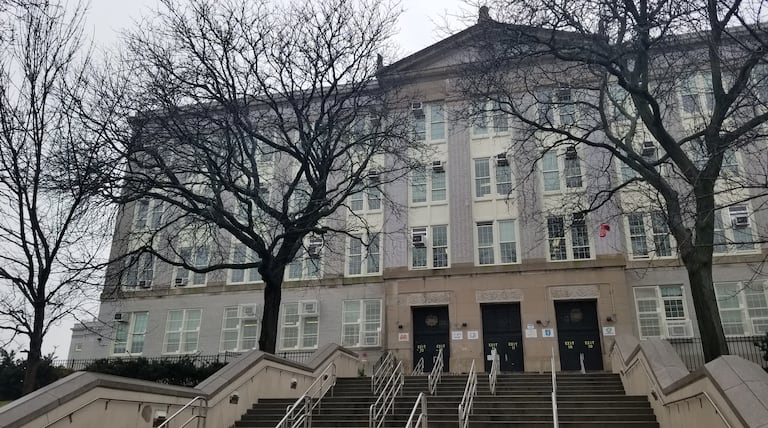
Created by teachers at the High School for Telecommunication, DataCation collects and analyzes student data, rivaling the city's own database.

When he began teaching at a Bronx high school, Jesse Olsen found the school had a large blind spot when it came to taking attendance.

If a student came to class for the first half of the school day and then skipped out, she’d go down in the official record as being present for the full day. The information holes made it impossible for teachers to know what their students’ true attendance was like, Olsen said.

A new, sophisticated database known as ARIS, for Achievement Reporting and Innovation System, might have been just the thing to solve the problem. But the system only let schools see how many days a student had missed, not how many classes they were skipping.

So Olsen took matters into his own hands, drawing on his computer science training to build an attendance system for his school, Validus Preparatory Academy.  In doing so he joined a growing number of teachers who don’t rely on the city’s data tools to track student information.

Brought into the city’s public schools in 2008 as a major initiative of Chancellor Joel Klein, ARIS cost $80 million to make. It debuted at the same time that Klein began to ask teachers to keep close track of student data and use it to adjust their instruction.

To do that, teachers would need more data. But even after recovering from some of its early glitches, ARIS continues to disappoint. Teachers complain that it offers them too little information and parents say it’s hard to access.

To meet the demand for data, some teachers and schools have created their own content management systems and are selling the products to other public schools.

Olsen’s program, called Impact, has an online attendance system that updates instantly and allows teachers to add comments on students’ behavior. Seeing that ARIS only includes students’ final course grades, he added an online gradebook that shows how students did on individual assignments, how well they’ve learned certain skills, and what work they still need to complete.

Impact is now in 21 New York City schools, which pay between $10 to $25 per student for a year of service. Teach for America recently began using it to track how some of its members’ students’ perform.

“I think when tools are made for districts, New York being the superlative example of a big district, they can only be so useful because they have to generalize,” Olsen said. “They have to make it work for the young and the old, the new and traditional.”

“What you emerge with is a tool that works for everybody but it barely does anything,” he said. “Schools should have a choice. The DOE should say here’s a number of recommended partners, we just need the data, you pick the tool that works in your way.”

Olsen’s suggestion comes at exactly the same time that the city is rethinking how schools use ARIS.

Deputy Chancellor for accountability Shael Suransky said the city will begin piloting a new version of the program called ARIS Local in some schools next spring. Teachers will be able to enter data on students’ progress on reading assessments and chapter tests that the current database doesn’t include.

“What we want in the long run is for ARIS to be a platform like the iPhone is a platform, where people can develop applications and they can draw the data from our central system and format it into easy to use ways,” he said. “ARIS is the first step on that path.”

On candidate for app creation might be DataCation, which emerged several years ago from teachers at the High School of Telecommunication Arts and Technology in Brooklyn. Created with a focus on the No Child Left Behind law’s requirements, the program allows schools to track students’ progress toward graduation, their schedules, and their grades.

The Telecommunication teachers sold DataCation to a company called CaseNEX, which also bought a scheduling program called Skedula that was developed by a former programmer at Herbert Lehman High School.

Last year, about 30 city schools purchased DataCation, a sleek program that lets schools do everything from scheduling classes and tracking credit accumulation to predicting their results on the federal government’s accountability system. The full suite can cost $8,500, but even in the midst of budget cuts, schools are finding ways to cover the expense.

Most DataCation clients are high schools, and many are struggling schools that the city or state could close if their graduation rates don’t rise. For them, being able to single out a group of low-performing students and focus on them is a matter of survival.

“It’s designed to really catch kids that are not identified using any other tools and to monitor their progress and make sure that info is available in a timely manner, not three semesters later,” said CaseNEX CEO Marsha Gartland. “It’s a pretty simple concept, but it can bring a whole new level of order to a school that’s been lacking it.”

One of DataCation’s most popular features allows parents to log in and see their children’s recent grades, attendance, and missing work. Parents can also do this on the ARIS website through the Parent Link, but there’s less information and it’s older.

In another case, a group of staff members at Leon Goldstein High School in Brooklyn formed the LMG Data Group to sell data management software to other schools. Their clients buy FileMaker, an Apple software product, and then the group sets up a customized data aggregation and display program based on what the school wants. This year, nine schools will use the software.

Goldstein Principal Joseph Zaza said the program began in 2006 as an experiment and a way for the school to know more about its students than the DOE’s software would permit.

‘We’ve done a lot more than just track student data,” Zaza said. “We use it to track student behavior. Deans put in behavioral problems and when a student doesn’t behave — doesn’t have a photo ID or is cutting class — then immediately the system emails that information to the guidance counselors and myself so that everybody is informed.”

The school also uses FileMaker to track how many hours of community service its students have done and the software has cut down on the number of lost books by linking students’ ID numbers to the books’ bar codes.

Schools are charged based on the complexity of their data demands, with one-time prices ranging from $5,000 to $40,000.

  • did you notice…

    Those who know say ARIS cost much, much, more than 80 million. I have heard the number 200 million if someone actually sat down from the very start and calculated all the costs. 

    ARIS IS A SCAM. Just another no contract bid and a vendor who made a killing with a lot of middle men who made a killing. Can’t an investigation be done on that?

  • Michael M.

    First, great reporting!
    This is really an incredible story from any number of angles:

    1) INNOVATION
    a. Impact’s connectivity with mobile devices. Does ARIS offer that? Will ARIS Local? Tracks “character.”
    b. Leveraging existing technology: LMG Datagroup’s use of Filemaker. Also tracks behavior issues.
    c. Integration: DataCation and Skedula

    2) COST — EVEN FORECASTED TO CITY-WIDE, and vs. ARIS
    a. Impact: $10-$25/student/yr. (If all costs are variable, if citywide, say $10M – $25M with likely economies of scale (EOS) reductions.)
    b. DataCation (and Skedula?): $8,500/school. Say $8.5M citywide. Before EOS.
    c. LMG DataGroup: A layer on top of Filemaker. $5k – $40k per school. Say $5M – $40M citywide (before EOS). Plus Filemaker at $300 – $3k(?) per school Say $300k – $3M citywide. Total $5.3M – $43M, verry roughly.
    d. ARIS is already a $80M ticket. How much will ARIS Local cost? How is the work being bid? Is it included in some ARIS maintenance contract? If so, how much is THAT per year? Or are the taxpayers now hostage to the original ARIS developer/vendor?
    e. Note that ALL of these alternatives cost much less than even the original version of ARIS, no more than HALF, even before ARIS Local. And even before centralized purchasing or scale economies. (Not enough info to assess capability match-ups, so this is admittedly spin.)

    3) FEEDBACK AND AGILITY, or the lack of either, at Tweed.
    a. Why did these innovators need to invest their own time and energy when the DOE had already paid $80M for ARIS? Simple: No “customer feedback” loop in the notorious top-down mindset of the Chancellor.
    b. Was the DOE going to do ARIS Local anyway, or only in reaction to, but not inclusion of, the competition.
    c. Me too-ism. ARIS as a potential app, or app backbone? iRIS? Rully?
    d. Cheap shots, but based on the record: the gang that brought us School Progress Reports – that random letter generator, except always A’s in election years — is going to double-down (quadruple given the above costs?) with Son of ARIS. WHY, when they should be absorbing the trailblazing already being done by others, and in the non-centralized manner supposedly trumpeted by Klein?

    4) How many of these three alternatives were the brainchilds (brainchildren?) of NYC Public High School teachers? ALL OF THEM:
    i. Validus Preparatory Academy in Da Bronx
    ii. High School of Telecommunication Arts and Technology, in Brooklyn
    iii. Leon Goldstein High School in Brooklyn
    Congrats all. And if anyone from Condon’s office asks, all for-profit work was done after hours on your personal computers. Everybody nod. ;-)

    And to think, the “I” in ARIS stands for… Innovation.

    Reminds me of a spoof on an old Ford slogan at an early MacWorld, originally poking fun at Microsoft: At [___Tweed___], Quality is Job 1.1.

    Thanks GS, and thanks NYC Public School innovators!

  • Peter

    Datacation (http://datacation.net/) is catching on with more and more schools, some of the CFN networks are providing training … true capitalism in action, the City spends $80 for ARIS and entrepreneurs create competing systems … whats next? a competing DOE? hummm, not a bad idea!

  • Sally Bee

    I agree with Michael M, great reporting. I had heard about the Telecommunications and Goldstein inventions but not the other ones. Just proves how many smart, capable and cutting edge folks work in the schools.

    Here’s a question. Did the DOE ever consider using this talent? Did they consider promoting these products especially for the struggling schools that need them? Did they even do a task force or think tank using the folks who invented these products? No. IBM knows better than school-based practitioners.?..Clearly shown to be untrue by the facts in this piece.

  • Pingback: This is Dropout Nation: America's Truancy Problem: The L.A. County Example

  • richard mangone

    If systems such as this are placed in NYC public schools the results could be mind boggling to all. For example, if teachers could indicate students behavior, classroom attendance, teacher generated test scores, lateness, required project scores, homework, and the number of times they tried contacting a parent or guardian, WOW would eyes open up to the reality of life in the classroom. I seriously doubt the DOE would allow such information made available to the public. In fact, I believe that some information as suggested would be subject to confidentiality and legal restrictions.

  • Peter

    Richard

    You can customize reports to include any data you chose to include, including teacher comments, all student records are subject to long established confidentiality rules, and parents have access to their childrens’ records.

    The more student/teacher specific data the more the argument increase re the use of the data for rating/pay for performance, that old doubled edged sword.

  • northbrooklyn

    I would love some gizmo I could hold in my hands that informed me in real time what to expect for the next period rather than finding it out as the teacher guides her students into my room. I’d love lots and lots of info that I do not get now. And I would really love a system that was responsive to my observations about a student.
    So that student could get much needed help. Or I could get much needed help.
    I am even willing to work very hard to see to it that this happened before I retired.
    But there doesn’t seem to be a Department of Future Retirees Goals at the DOE.
    Pity.

  • http://Www.teachingmatters.org Lynette guastaferro

    On an iPhone. Gotham. Wondering if you plan to make tweeting sharing of articles easier. Don’t see the usual obvious buttons. Wanted to pass this on to educaters who follow Ed tech. But not always Ed reform. Tx!

  • mabelgreene

    Im a former student @ Validus Prep and I remember when Mr. Olsen first created impact for the school. It made things ao much easier for the students and teacher to go through the course of the school day. Teachers had better updates for students on grades, assignment, attendence. Also, as a student it almost impossible to “cut” class, that most students did very frequently in school before. It shows the student there progress and assignment, so students have no problems keeping up. Impact is a savior. Hopefully we will see it in more school pretty soon

  • http://thejosevilson.com/ Jose

    With this discussion, it’s important to note that some people like the disaggregation of data sources. I, for one, don’t want my grades on ARIS except for the final one. I have another tracking system for that under EnGrade, and it works for my communication needs. Nonetheless, it’s great that teachers are taking the charge in creating their data systems since we had no input into this no-bid technology.

  • Pingback: Missouri School Data: building platforms that work | United for Missouri | The Missouri Minute

  • Pingback: Gotham Gazette - The Wonkster » Blog Archive » Tied to Tech

  • Pingback: Gotham Gazette - The Wonkster » Blog Archive » Another Black Eye for Ed Dept. Tech Effort

  • Pingback: Best of Dropout Nation: America’s Truancy Problem: The L.A. County Example | Dropout Nation: Coverage of the Reform of American Public Education Edited by RiShawn Biddle

  • Pingback: Gotham Gazette - The Wonkster » Blog Archive » More Scrutiny for Education Contracts

Tips, questions, feedback?

Contact us at .

Word from Our Sponsor

From Our Jobs Board

Featured Employers
Recent Jobs

Chalk It Up

Recent Comments

49 comments so far today

Archives

June 2013
M T W T F S S
« May  
 12
3456789
10111213141516
17181920212223
24252627282930