GothamSchools — daily independent reporting on NYC public schools

Office Space

The Buck Stops Elsewhere

I grew up in Long Island, and I’ll never forget the construction of a local park, named for a spectacularly corrupt local politician. For years, we rode our bicycles past the park, watched piles of dirt move from one side to the other, and nothing of consequence happened. As long as they kept shuffling back and forth, it gave the appearance of progress. When I hear talk of “reform” from Tweed, I always think of those ever-shifting dirt piles.

For example, snow is falling, and that can only mean it’s school-closing time again in New York City. According to Tweed, these schools are failing and must be replaced ASAP. It’s not their fault the schools are failing, because nothing is their fault, and anyway, it’s not their job to fix schools.  What is their job? Nobody really knows. And anyway, why should they bother fixing schools when they can simply rename them, fill them with different kids, and pretend the old ones never existed?

If schools they started specifically to replace closed schools don’t pass muster, that’s not their fault either. The folks at Tweed are ready and willing to close the schools they opened, and take no responsibility whatsoever. The important thing is they’re going to open even newer ones, and whether they end up closing is not their problem. It isn’t Tweed’s fault, it isn’t Chancellor Klein’s fault and it isn’t Mayor Bloomberg’s fault either. Here in New York City, that’s called “accountability.”

Chancellor Klein defends his decision to close Queens schools, saying there will be new ones. Yet even if you rely on a highly enthusiastic article about new Queens construction, you can only conclude the city’s plans are woefully inadequate. For example, it mentions a $71-million project that will provide 150 seats. But it’s clearly not going to make the slightest dent in the 33,000 seats needed for Queens high schools.

This same article suggests another $181 million will be spent, but gives no clue as to how many seats it will buy. Given the apparent cost per pupil, it’s highly doubtful Queens will see more than 500 seats total. There’s also a Catholic school in there bound for conversion, but I’m going to wildly speculate it will accommodate far fewer than the 32,000-plus we’re looking for. And here’s the kicker — not all the newly planned seats are for high schools anyway.

Tweed lucks out when articles don’t mention how many seats will be created, let alone how many are needed. It’s unlikely readers who rely on such reporting will have any idea how much the already unconscionable overcrowding will remain unaddressed.

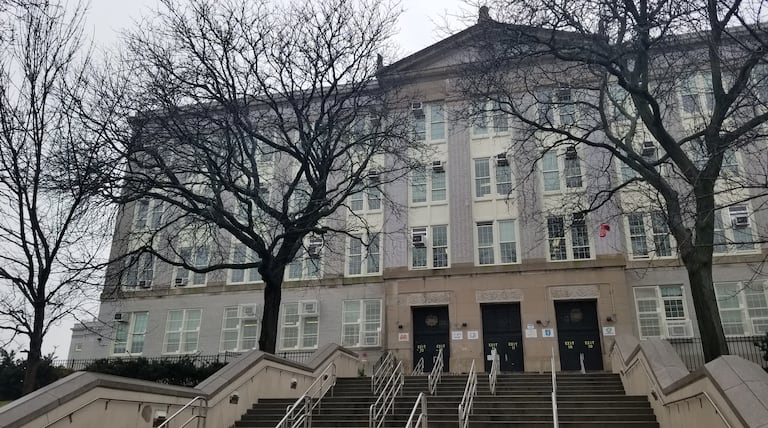
In fact, it’s entirely possible, under the new plans, that overcrowding will be exacerbated. For example, Chancellor Klein plans to close Jamaica High School. Yet he doesn’t plan to devote the building entirely to high school students, opting to admit kids as young as sixth grade. Thus, there will be actually be fewer high school seats in a high school building under his proposed scenario.

Those of us who work with teenagers are acutely aware when change is needed. For example, if Tommy Hilfiger is deemed not as cool as Abercrombie and Fitch, your t-shirt needs to be replaced immediately. Teenagers need change, and passing trends must be respected. As the parent of a teenager, in charge of buying whatever new cool thing has suddenly become absolutely necessary, I understand exactly how this works. The DOE, though, not only buys into teenage-style trends, but seems willing to replace the t-shirt with a pair of socks, thereby making things even worse.

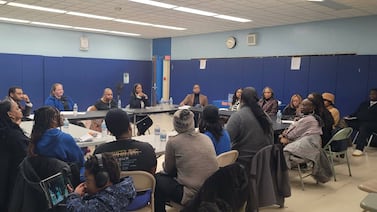
The main problem for which Tweed bears no responsibility is its chronic and utter unwillingness to repair, let alone acknowledge, what may be broken. On December 16, like a mantra, the DOE’s Debra Kurshan repeated that funding follows kids, that what schools they attended wouldn’t affect that, and that all kids got exactly the same resources in Mayor Bloomberg’s New York. You’d think that it made no difference whatsoever where kids went to school, and wonder why, therefore, any school anywhere would be closed for any reason. Nonetheless, they were closing this one. That Jamaica would be a neighborhood without a neighborhood school was of no consequence whatsoever, nor did it merit lip service from Ms. Kurshan.

Despite the claims about equal funding, speaker after speaker got up and compared the conditions in Jamaica to those at Queens Collegiate, the small school located in the same building. Why do they, with 163 students, have 20 Smartboards, while Jamaica, with 10 times that number, has only two? Why does Jamaica pay 25% more for teachers? Why haven’t Jamaica kids got regular teachers three months into the school year?

The big question, of course, repeated in various manifestations was this: Why couldn’t they fix Jamaica instead of closing it? Ms. Kurshan stated studies showed closing schools was more effective than fixing them, but didn’t bother to cite any sources. This indicated clearly, though, that they hadn’t bothered sending a team of experts to try improving the 116-year-old landmark school. Have they even got a team of experts capable of doing so?

Rather than fix struggling schools, what the DOE actually does is shoehorn small schools or charter schools into every available space. In the case of Queens Collegiate, they managed to prove the Jamaica building was not as scary or dangerous as people thought, and that with proper attention and resources, kids would come. Queens Collegiate is publicly touted as “developed in collaboration with the New York City Department of Education, the Bill & Melinda Gates Foundation, and the Michael & Susan Dell Foundation.” Is there anyone who actually believes that doesn’t entail funding above and beyond that which Jamaica receives? Don’t hold your breath waiting for Tweed to extend that experiment to neighborhood schools.

In the case of my school, Francis Lewis, they saw we did well, so they shoveled hundreds of additional kids in year after year. Though we tried many, many things to alleviate the overcrowding, the only response from Tweed, for years, was to continue filling every available space with every available kid. If we faltered as a result, does anyone believe they’d have hesitated one moment before closing us too?

Really, why should they? Doing so might mean they’d have to foot the bill for real improvements, like decent conditions or reasonable class sizes. It’s far easier to shuffle and hide problems, like so many piles of dirt, loudly scapegoat teachers and unions, and hope nobody notices.

So far, it’s worked like a charm.

  • Christine Rowland

    You are so right about the impact of overcrowding. The biggest statistical impact of overcrowding is comes over the long term. Back in school year 2003-4 Christopher Columbus High School was placed on an ‘end-to-end’ session to accommodate the influx of 5 small schools. While small school students enjoyed a traditional school day Columbus senior and junior students arrived at 7:25 am and finished classes at 12:20, while freshmen and sophomores entered at 12:25 and had programs ending at about 5:20. They studied U.S. History in the auto shop and held up to 8 classes simultaneously in the library. The following school year was only marginally better – moving from a 12 period to an 11 period day.

    Seniors did not like the early start – advanced placement classes were held early, but if students were well on track they were generally able to complete their education. If you walked the halls in the morning it just didn’t feel too terrible. The worst impact was reserved for those on the late session. Freshmen had a terrible start. Parents were unhappy about their children staying so late and the 11th and 12th periods had very poor attendance.

    As we attempted to gain equity for our students and fought for their rights the UFT set up an opportunity to meet with Michele Cahill, Laura Rodgriguez, Bob Hughes and several others. At this meeting I predicted that full effects of the overcrowding would only be seen several years down the road in graduation rates.

    Fast forward to the present. The DoE is now attempting to use the long term 6 year graduation rate of that group of freshmen as a major rationale for our closing. Although our 7 year graduation rates for years prior were much higher this cohort’s 6 year rate is, unsurprisingly, lower than that of previous cohorts. So Francis Lewis and other schools really need to be concerned about the long term effects of overcrowding. The DoE will not hold itself accountable for its role in your outcomes – accountability will be yours and yours alone.

  • Michael M.

    Thank-you AG and CR!

    Too many fantastic points above to echo, so I hereby suggest we start a “TWEED-SPEAK Glossary”:

    1) “Funding Follows Kids”
    But what of the CAPITAL funding needed to build them seats? Which might preclude…

    2) “End-to-End”
    More like “Fail to Plan” results in “Fail to SUCCEED.” Which gets back to…

    3) “Accountability”
    Kleinbergian for “Not OUR Fault.” But who sets the capital budget (and has the chutzpah to call it “needs-driven”)?

    Feel free to add.

  • http://www.elfrank.com John Elfrank-Dana

    By fixing the schools we need to look at the families these kids come from. Many, too many, come from stressed homes where they have been physically disciplined, not read to, and been largley unsupervised. What we can do is provide the necesary supports to help them: reduce class size and provide more social work services to the student and family. This needs to be done with existing schools instead of the dodge of breaking them up and reshuffling the deck.

    By taking our eye of the underlying problems of poverty and instead being suckered into the standards movent (thanks Al Shanker), accountability (thanks Sandra Feldman) and charter school frauds (thanks Randi Weingarten), the UFT is fighting for its life and won’t be able to help advance public education so viatl to our democracy (or what’s left of it).

    John Elfrank-Dana
    UFT Chapter Leader
    Murry Bergtraum High School

    TW, Please get a new web server. This web site runs way too slow!

  • Arthur Goldstein

    Unfortunately, the replacement schools being sent in by the DoE are the least likely to accommodate students with special needs. More likely they’ll be sent to large schools, and the large schools will face closure. It’s no coincidence that Beach Channel is looking at oblivion just two years after they killed Far Rock.

Tips, questions, feedback?

Contact us at .

Follow GothamSchools

RSS

Feb. 10: You’re invited!

Chalk It Up

Recent Comments

33 comments so far today

Our Twitter Updates

  • Edu-Tweeples, is there a hash tag everyone is using for tonights PEP meeting? Suggestions? #0209PEP ? 1 hr ago
  • Conflict of Interest Board "could have lost the power to enforce the City’s ethics law against all unionized employees of the City." 1 hr ago
  • Tenured teachers and principals can now be fined by the city's ethics board, a judge ruled today. Previously, only DOE could fine violators. 1 hr ago
  • As closure votes for 23 schools near, we mapped all the city schools that have closed or could soon close: http://t.co/Uv26t1tA 5 hrs ago
  • 13 statistical tables from the city's Independent Budget Office about the schools up for closure tonight: http://t.co/kPYikzgj 7 hrs ago
  • More updates...

Archives

February 2012
M T W T F S S
« Jan  
 12345
6789101112
13141516171819
20212223242526
272829  
?>